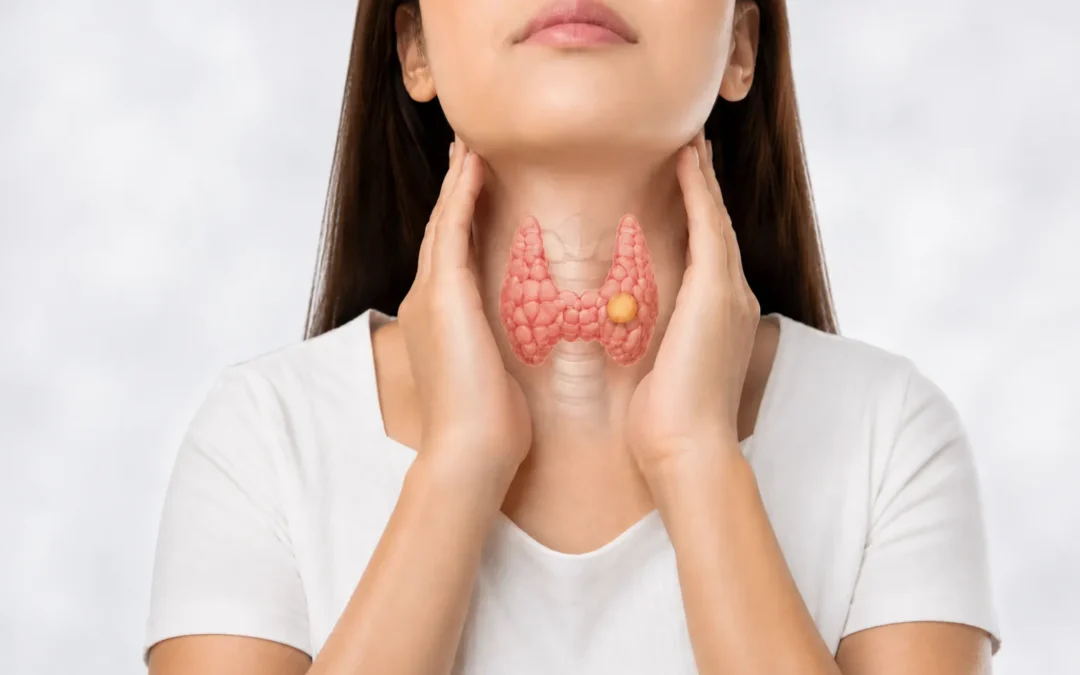
You had a lump in the thyroid, an ultrasound, and then a needle test. Now the thyroid FNAC report in your hand says “Bethesda III” or “follicular neoplasm”, and nobody has explained what that means. You are not alone – this is one of the most common reasons patients come to a thyroid cancer specialist doctor in Ahmedabad for a second opinion.
This guide explains what FNAC is, what each of the six Bethesda categories means, the approximate cancer risk in each, and what usually happens next. It is meant to help you understand your report and ask the right questions – your own doctor will advise on your specific case.
| Have a thyroid FNAC or ultrasound report? WhatsApp it to +91 97277 03693 for an expert opinion. |
First, Some Reassurance About Thyroid Nodules
Thyroid nodules are extremely common, and they are found far more often today because ultrasound is used so widely, including during routine health check-ups. Many adults have at least one, and most are found by chance on an ultrasound done for another reason. The large majority are benign. Even when a nodule is cancer, most thyroid cancers – especially papillary thyroid cancer – grow slowly and are among the most curable cancers when treated properly.
What Is FNAC and Why Was It Done?
FNAC stands for fine-needle aspiration cytology. A very thin needle, usually guided by ultrasound, takes a few cells from the nodule. A pathologist then examines the cells under a microscope.
FNAC is not done for every nodule. Doctors decide based on the nodule’s size and ultrasound features – for example, whether it is solid, darker than the surrounding thyroid, has an irregular edge, tiny bright spots (microcalcifications) or is taller than it is wide. Many radiologists use a scoring system such as ACR TI-RADS to grade these features.
What FNAC can and cannot tell you
- It can show that a nodule is clearly benign or clearly cancer in most cases
- For some nodules, especially follicular patterns, cells alone cannot show whether the nodule is cancer – this needs the whole nodule to be examined after removal
- Sometimes the sample does not contain enough cells and must be repeated
How to Read Your Thyroid FNAC Report
Most laboratories now report thyroid FNAC using the Bethesda System for Reporting Thyroid Cytopathology. The third edition, published in 2023, gives each of six categories a single name and an average risk of cancer.
The six Bethesda categories at a glance
| Category | Name on report | Average risk of cancer* | Usual next step |
| I | Nondiagnostic | about 13% | Repeat FNAC with ultrasound guidance |
| II | Benign | about 4% | Follow-up ultrasound; surgery only if large or causing symptoms |
| III | Atypia of undetermined significance (AUS) | about 22% | Repeat FNAC, molecular testing, or diagnostic lobectomy |
| IV | Follicular neoplasm | about 30% | Diagnostic lobectomy (or molecular testing) |
| V | Suspicious for malignancy | about 74% | Surgery |
| VI | Malignant | about 97% | Surgery, planned after staging |
*Approximate averages from the 2023 Bethesda System. The real risk for an individual nodule also depends on its ultrasound appearance, size, the patient’s age and history, and the experience of the laboratory.
Bethesda I to VI: What Each Category Means
Bethesda I – Nondiagnostic
The sample did not contain enough thyroid cells to give an answer. This is not a bad result – it simply means the test should usually be repeated, ideally under ultrasound guidance, after a gap of a few weeks. Cystic nodules (filled with fluid) often give this result.
Bethesda II – Benign
This is the most common result. The nodule looks like a benign colloid nodule or thyroiditis. Most patients need only a repeat ultrasound after 12–24 months. Surgery is considered only if the nodule is very large, growing quickly, causing pressure symptoms such as difficulty swallowing, or if the ultrasound remains very suspicious.
Bethesda III – Atypia of Undetermined Significance (AUS)
The cells show small changes that are not clearly benign or clearly cancer. Options include repeating the FNAC, molecular testing of the sample (available in some centres), or removing half of the thyroid (lobectomy) to reach a definite answer. Your ultrasound features help decide which path is right.
What Is Molecular Testing?
For indeterminate results (Bethesda III and IV), some laboratories can test the FNAC sample for genetic changes linked to thyroid cancer, such as BRAF or RAS mutations and gene fusions. A negative test can sometimes allow a patient to avoid diagnostic surgery and continue with ultrasound monitoring, while a positive test supports surgery. Availability and cost vary in India, so your specialist will advise whether it is useful for you.
Bethesda IV – Follicular Neoplasm
The cells are arranged in a pattern that can occur in both benign follicular adenomas and follicular cancers. FNAC cannot tell them apart, because the difference lies in whether the tumour has invaded its capsule or blood vessels. The usual step is a diagnostic lobectomy – removal of the affected half of the thyroid – so the whole nodule can be examined.
Bethesda V – Suspicious for Malignancy
The cells strongly suggest cancer – most often papillary thyroid cancer – but not every feature is present. Surgery is usually recommended. The extent of surgery (half or the whole thyroid) depends on the size of the nodule, ultrasound of the neck glands and other factors.
Bethesda VI – Malignant
The cells show cancer, most commonly papillary thyroid cancer. Less often the report describes medullary thyroid cancer, which needs extra blood tests (calcitonin and CEA) and genetic testing, or rarer types such as anaplastic cancer or lymphoma, which are managed differently. A neck ultrasound is done to check the lymph glands, and sometimes a CT scan, before planning surgery. For many patients, treatment is very effective.
What Happens If Surgery Is Advised?
If your thyroid cancer surgeon in Ahmedabad recommends an operation, it will usually be one of these:
- Hemithyroidectomy (lobectomy) – removal of one half of the thyroid. Used for many Bethesda III and IV nodules and some small, low-risk cancers. Many patients do not need thyroid tablets afterwards.
- Total thyroidectomy – removal of the whole gland, for larger or higher-risk cancers, cancers on both sides, or when radioactive iodine is planned. Lifelong thyroid hormone tablets are needed.
- Neck dissection – removal of lymph glands when cancer has spread to them.
Experienced surgeons protect the two nerves that move the vocal cords and the small parathyroid glands that control calcium. Most patients go home within one to two days. For common questions about the operation itself, read our thyroid cancer surgery FAQs.
Thyroid Cancer Treatment in Ahmedabad After Diagnosis
Thyroid cancer treatment in Ahmedabad follows the same international guidelines used worldwide. After surgery, some patients with papillary or follicular cancer receive radioactive iodine, decided by their risk category. All patients have regular follow-up with blood tests (TSH and thyroglobulin) and neck ultrasound. Very small, low-risk papillary cancers may, in selected patients, be watched with regular ultrasound instead of immediate surgery – a choice to discuss with your specialist.
Thyroid Cancer Surgeon in Ahmedabad: When to Seek a Second Opinion
FNAC reading involves judgement, and borderline categories (III, IV and V) can be interpreted differently by different pathologists. A second opinion is reasonable when:
- Your report is Bethesda III, IV or V and surgery has been suggested
- The FNAC result does not match the ultrasound appearance
- You have been told you need the whole thyroid removed for a small nodule
- The sample was taken without ultrasound guidance and the result is unclear
A second opinion usually involves reviewing the ultrasound images, repeating the ultrasound if needed and, where possible, having the FNAC slides reviewed by an experienced cytopathologist. It rarely delays treatment by more than a week or two.
Questions to Ask Your Thyroid Cancer Doctor in Ahmedabad
When you meet a thyroid cancer doctor in Ahmedabad about your FNAC report, it helps to ask:
- What is my Bethesda category, and what does it mean for me?
- What did my ultrasound show, and does it change the risk?
- Do I need a repeat FNAC or molecular testing before deciding?
- If surgery is needed, will you remove half or all of the thyroid, and why?
- Will I need thyroid tablets or radioactive iodine afterwards?
- How will you protect my voice nerves and parathyroid glands?
Bring your ultrasound images (not only the report), the FNAC report and any thyroid blood tests to the appointment.
Choosing a Thyroid Cancer Specialist in Ahmedabad
Thyroid surgery is safest in the hands of surgeons who perform it regularly. When choosing a thyroid cancer specialist in Ahmedabad, look for fellowship training in head and neck or endocrine surgery, experience with neck dissection, careful nerve and parathyroid preservation, and a team for radioactive iodine and follow-up.
Dr. Vishal Choksi is a head and neck cancer surgeon in Ahmedabad trained in the Head and Neck Service at Memorial Sloan Kettering Cancer Center, New York, with advanced training in minimally invasive video-assisted thyroid surgery at the University of Pisa, Italy. He also operates on parathyroid tumours as a parathyroid adenoma surgeon in Ahmedabad, since these small glands sit right behind the thyroid. Read more about Dr. Vishal Choksi or see patient reviews.
| Book a thyroid nodule consultation with Dr. Vishal Choksi: +91 97277 03693 | +91 79 2646 8666 | Contact and directions |
Frequently Asked Questions
Does Bethesda III mean I have thyroid cancer?
No. Bethesda III means the cells show minor changes that are not clearly benign or cancerous. Most Bethesda III nodules turn out to be benign. A repeat FNAC, molecular testing or a diagnostic lobectomy can give a definite answer.
Why can’t FNAC tell whether a follicular neoplasm (Bethesda IV) is cancer?
Follicular cancer is diagnosed by seeing whether the tumour has invaded its capsule or blood vessels. That can only be seen when the whole nodule is removed and examined, not from a small sample of cells.
My FNAC was benign. Do I still need follow-up?
Usually yes. A repeat ultrasound after 12–24 months is common to make sure the nodule is stable. If it grows significantly or looks suspicious, a repeat FNAC may be advised.
Is thyroid FNAC painful?
Most people feel only mild discomfort, similar to a blood test. The needle is very thin, the test takes a few minutes, and you can return to normal activities the same day.
Will I need to take thyroid tablets after surgery?
After a total thyroidectomy, yes, lifelong. After removal of only half of the thyroid, many people do not need tablets, but thyroid blood tests are checked to make sure.
Leave a comment