Skull Base Cancer in Ahmedabad
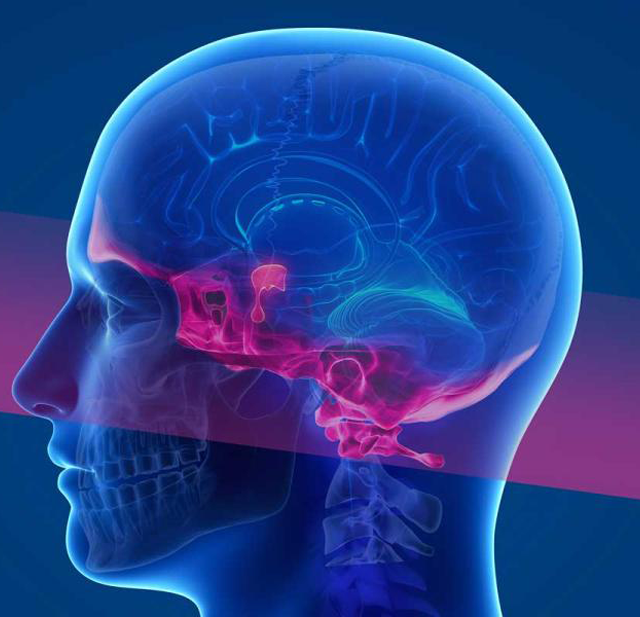
The skull base is the floor on which the brain rests, and the roof of the nose, sinuses and eye sockets. Tumors in this area are uncommon, often found late, and lie close to the eyes, the brain and important nerves and blood vessels. Treating them safely requires a team. This page explains the types, symptoms and treatment of skull base cancer, and how Dr. Vishal Choksi – a Memorial Sloan Kettering–trained head and neck cancer surgeon and skull base cancer surgeon in Ahmedabad – works with neurosurgeons, radiation oncologists and reconstructive specialists to treat these complex tumors.
Blocked nose on one side, nosebleeds or facial numbness that will not go away? Get evaluated: +91 97277 03693
Skull Base Cancer in Ahmedabad: Quick Facts
Question | Answer |
Where it starts | Usually in the nose or sinuses, growing up into the floor of the skull |
Why it is found late | Early symptoms look like sinusitis – a blocked nose or nosebleeds on one side |
Main treatment | Surgery – endoscopic, open or combined – usually followed by radiation |
Who operates | A team: head and neck surgeon and neurosurgeon, with reconstructive support |
Key scans | MRI and CT of the sinuses and skull base |
Surgeon | Dr. Vishal Choksi – MSKCC-trained head and neck surgeon, Apollo Ahmedabad |
What Is the Anterior Skull Base?
The anterior skull base is the front part of the skull floor, lying above the nasal cavity and ethmoid sinuses and between the eye sockets. Tumors that start in the nose and sinuses can grow upward through this bone toward the brain. Skull base tumors may also start from the bone itself, the lining of the brain, or nerves.
Types of Skull Base Cancer and Tumors
- Sinonasal squamous cell carcinoma – the most common cancer of the nose and sinuses
- Sinonasal adenocarcinoma – linked to wood and leather dust exposure
- Olfactory neuroblastoma (esthesioneuroblastoma) – arises from the smell nerve at the roof of the nose
- Sinonasal undifferentiated carcinoma and neuroendocrine carcinomas – aggressive; need combined treatment
- Adenoid cystic carcinoma – a salivary gland cancers type that spreads along nerves toward the skull base
- Mucosal melanoma – rare, arising in the lining of the nose
- Sarcomas and bone tumors – such as chondrosarcoma
- Cancers of the upper jaw and sinus extending upward – see maxillary (upper jaw) cancer
Nasopharyngeal cancer, which sits behind the nose, is usually treated with radiation and chemotherapy – see throat cancer.
Symptoms of Skull Base Cancer
Early symptoms often look like sinusitis, which is why these tumors are frequently diagnosed late. See a specialist if you have any of the following on one side for more than a few weeks:
- Blocked nose that does not improve with treatment
- Nosebleeds or blood-stained discharge
- Loss of smell
- Facial pain, swelling or numbness over the cheek
- Watering of the eye, bulging eye or double vision
- Headache that is new and persistent
- Loose upper teeth or a swelling in the palate
- A lump in the neck
Diagnosis and Staging
- Nasal endoscopy in the clinic to see and sample the tumor.
- Biopsy – often endoscopic, under local or general anaesthesia.
- MRI – shows the tumor’s relationship to the brain, eye and nerves.
- CT scan – shows bone erosion of the skull base and sinuses.
- PET-CT – for aggressive cancers or suspected spread.
- Eye and nerve assessment when the orbit is involved.
Every case is then discussed at a skull base tumor board before treatment.
Skull Base Cancer Treatment in Ahmedabad
Treatment is planned at a skull base tumor board. For most cancers it combines surgery to remove the tumor completely with radiation afterwards; for a few aggressive tumors, chemotherapy is given first to shrink them. The approach depends on the tumor type, where it has spread and what can be removed safely while protecting the eyes, brain and nerves.
Anterior Skull Base Surgery in Ahmedabad: Endoscopic and Open Approaches
Endoscopic endonasal skull base surgery
Many tumors of the nasal cavity, sinuses and anterior skull base can be removed through the nostrils using endoscopes and fine instruments – with no cut on the face. The defect in the skull base is repaired with tissue from inside the nose (such as a nasoseptal flap) to prevent leakage of brain fluid. Benefits, where suitable, include less pain, no facial scar and faster recovery. The choice of endoscopic surgery depends on removing the tumor completely; it is never used at the cost of a clear margin.
Open craniofacial approach
Open surgery is used when a tumor involves the skin, the eye socket extensively, the front wall of the sinuses or a large area of the brain lining, a combined approach through the face and a small opening in the skull may be needed. This operation is performed jointly by a head and neck surgeon and a neurosurgeon. Read about craniofacial resection and reconstruction.
Combined approaches
Some tumors are best removed with a combination of endoscopic and limited open approaches, tailored to the tumor.
Radiation Therapy and Chemotherapy
Most skull base cancers need radiation after surgery. Advanced techniques such as IMRT help protect the eyes and brain. Chemotherapy is used for certain aggressive tumors, sometimes before surgery to shrink them.
A Team Approach to Skull Base Surgery
Skull base surgery is performed at Apollo Ahmedabad by a team that may include a head and neck surgeon, neurosurgeon, ophthalmologist, reconstructive surgeon, radiation oncologist, medical oncologist, neuroradiologist and pathologist. Whether you are looking for an endoscopic skull base surgeon in Ahmedabad or need open surgery, the operation is planned by this team. Dr. Choksi brings head and neck cancer expertise in oncological margins, neck management and reconstruction. [VERIFY: describe his exact role]
Choosing a Skull Base Cancer Specialist in Ahmedabad
- Is the team experienced in both endoscopic and open skull base surgery?
- Is a neurosurgeon part of the operating team when needed?
- Are reconstruction and repair of the skull base planned in advance?
- Is radiation with modern techniques available after surgery?
- Is every case reviewed at a tumor board?
Why Choose Dr. Vishal Choksi as Your Skull Base Cancer Doctor in Ahmedabad
- Head and neck surgery fellowship at Memorial Sloan Kettering Cancer Center, New York – one of the world’s leading skull base programmes
- More than 20 years of experience in complex head and neck cancer surgery
- Multidisciplinary skull base care at Apollo Ahmedabad
- Clear explanation of goals, risks and recovery for each approach
Read about Dr. Vishal Choksi.
Recovery After Skull Base Surgery
After endoscopic surgery, most patients stay three to five days and are asked to avoid nose blowing, straining and heavy lifting for several weeks. Nasal saline rinses help healing. After open craniofacial surgery, the stay is usually one to two weeks. Follow-up includes nasal endoscopy and MRI at regular intervals.
Frequently Asked Questions About Skull Base Cancer
What is skull base cancer?
It is cancer that starts in, or grows into, the bone at the base of the skull, most often from the nose and sinuses.
What are the early symptoms?
One-sided blocked nose, nosebleeds, loss of smell, facial numbness or eye watering that lasts more than a few weeks.
Can skull base tumors be removed without cutting the face?
Many can. Endoscopic endonasal surgery removes suitable tumors through the nostrils without facial incisions.
Who performs skull base surgery?
A team, usually a head and neck surgeon and a neurosurgeon, supported by reconstructive surgeons, radiation oncologists and others.
Is skull base cancer curable?
Many skull base cancers can be cured or controlled, especially when completely removed and followed by radiation. Outcomes depend on the tumor type and extent.
What is a CSF leak?
A leak of the fluid around the brain through the nose. Surgeons repair the skull base carefully to prevent it; if it occurs, it is usually treatable.
Will I lose my sense of smell?
It depends on the tumor. Tumors of the roof of the nose, such as olfactory neuroblastoma, often require removing the smell nerve.
Will I need radiation after surgery?
Most skull base cancers need radiation after surgery to reduce the chance of recurrence.
How long is recovery after endoscopic skull base surgery?
Most patients return to light activity within two to three weeks, with full recovery over six weeks.
How do I find an experienced endoscopic skull base surgeon in Ahmedabad?
Look for a team that performs both endoscopic and open skull base surgery regularly, includes a neurosurgeon and a head and neck surgeon, uses image guidance, and reviews every case at a tumor board. Ask how many similar operations the team performs each year and how the skull base will be repaired.
How do I consult a skull base cancer specialist in Ahmedabad?
Call +91 97277 03693 or +91 79 2646 8666 and bring your MRI, CT and biopsy reports.
Sources
- NCI – Paranasal Sinus and Nasal Cavity Cancer Treatment (PDQ)
- NCCN Guidelines – Head and Neck Cancers (includes ethmoid and maxillary sinus tumors)
- European Position Paper on Endoscopic Management of Tumours of the Nose, Paranasal Sinuses and Skull Base (Rhinology Supplement)
Author & Medical Review
Dr. Vishal Choksi, MBBS, Diplomate American Board of Surgery, AHNS Fellow. Medically reviewed by Dr. Vishal Choksi.