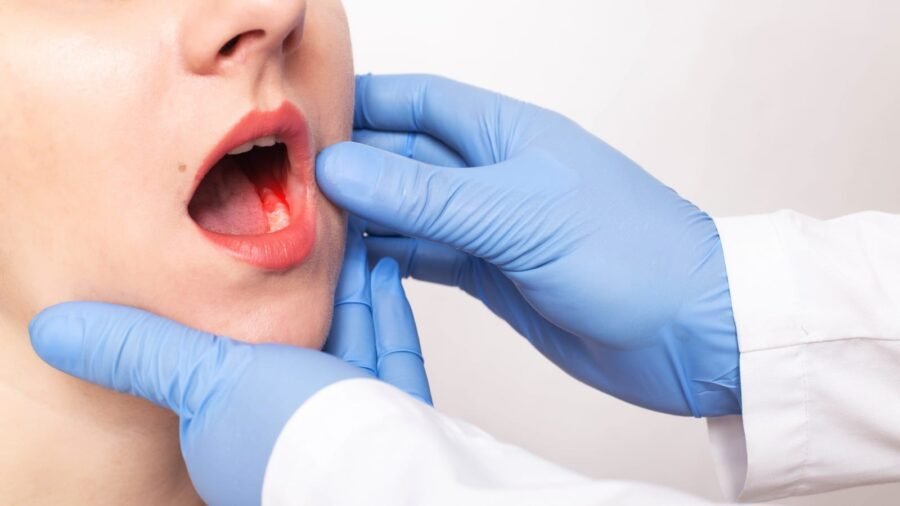
Most discussions about oral cancer in Ahmedabad occur when a diagnosis has been given. Oral cancer isn’t always apparent without warning. In the majority of instances, it arises from precancerous and identifiable changes that are evident for in the months or years prior to when cancer is diagnosed. The early recognition of these changes and knowing how is best to tackle themis the best chance to avoid oral cancer altogether or catch it in its most treatable stage.
This guide is focused on precancerous conditions which precede oral cavity cancer in Ahmedabad -the way they appear and how they cause them, and when you should consult an expert head and neck surgeon in Ahmedabad such as Dr. Vishal Choksi.
Why Precancerous Conditions Matter More Than Most Patients Realise
The transition from the healthy tissue of your mouth to cancerous generally occurs in distinct stages. The precancerous (potentially malignant) conditions provide a crucial time for intervention — an opportunity for simple measures, lifestyle changes or minor treatments can help to prevent the development of a fully-grown cancer.
The problem is that most precancerous lesions don’t cause pain at the beginning. This is why they’re often overlooked until they become more serious and that is why routine self-examination of the mouth and dental examinations are crucial.
The Major Precancerous Conditions of the Oral Cavity
1. Leukoplakia
The most commonly reported oral cancer is a white plaque on the mucosa of your mouth. It can’t be removed and cannot be linked to any other cause that can be identified.
Features that are important:
- Small, white patches typically located on the cheeks, tongue, or gums.
- The majority of pain is non-existent in the initial stages.
- Intensely linked to tobacco use (smoking as well as smokeless tobacco)
Malignant transformation danger: Approximately 1-3% of cases of leukoplakia develop into oral cancer with time, more so in lesions that show dysplasia (abnormal cell transformations) in biopsy.
2. Erythroplakia
A red, velvety spot in the oral mucosa is less prevalent than leukoplakia yet carrying the significant likelihood for malignant change and some research suggests that up 50 percent of lesions arising from erythroplakia have precancerous or cancerous changes upon biopsy.
The most important features are:
- Red patches, which are often well-delineated
- Most often, it is found on the oral floor soft palate, tongue
- It is recommended to have biopsies done promptly due to the risk profile of high-risk.
3. Oral Submucous Fibrosis (OSMF)
A progressive, chronic condition that causes fibrous tissue to grow under the oral mucosathat causes stiffness and a gradual limitation of the opening of the mouth (trismus). OSMF is specifically and strongly connected to Areca Nut (betel nut) chewing and is also present in gutka and paan products that are that are widely consumed throughout Gujarat.
The most important features are:
- Mouth opening difficulty that is progressive. completely
- The sensation of burning is intense, particularly with spicy foods
- The appearance is stiff, pale, and fibrous. oral mucosa
- A bluish (whitish) look of cheek liner
Risk of malignant transformation OSMF is among the most rates of malignant transformation of precancerous oral disorders, about 7-13% and is an especially vital condition to treat promptly, particularly considering the widespread use of areca nuts is in the region.
4. Oral Lichen Planus
A chronic inflammatory condition that manifests as white, lacy pattern, red spots or ulceration of oral mucosa. Although the risk of malignant transformation is less than that of leukoplakia or erythroplakia (estimated at one per cent), the ulcerative and erosive forms require periodic monitoring.
5. Actinic Cheilitis
Lips are affected, especially the lower lipresulted from prolonged exposure to sunlight. The signs are dryness, scaling as well as blurring the clear line between the lips and the skin. It is more common in patients who have extensive exposure to sun with no protection for the lips.
Risk Factors That Drive Precancerous Changes in Ahmedabad
Understanding the regional risk factors is vital to oral cancer in Ahmedabad and its prevention, particularly:
- Tobacco consumption (smoking as well as smoke-free forms (khaini, gutka and zarda) — is the most dangerous risk element
- Areca nuts (betel supari) consumption is strongly connected to OSMF widespread across Gujarat
- Consumption of alcohol — especially when combined with tobacco use the risk increases significantly over any one factor on its own
- HPV infections — becoming increasingly recognised for its risk factors, especially for involvement in the oropharynx.
- Mechanical irritation that is chronic, caused by dentures that don’t fit properly or sharp tooth edges that cause repeated injuries to the same region
- Bad oral hygiene is associated with a higher risk of developing the disease, independent of other risk factors
What to Do If You Notice a Suspicious Change
Step 1 — Self-Examination
Every month, you should examine your mouth with good lighting, examine the insides of your cheeks beneath your tongue as well as your gums and the mouth’s roof as well as your lips, for colored, red or other unusually textured spots.
Step 2 — Don’t Wait If You Notice:
- Any red or white patch that persists for more than 2 weeks
- The mouth wound that isn’t healing within two to three weeks
- The mouth is becoming difficult to open completely
- The lips or any part of the lips or mouth without a clear cause
- Unusual bleeding from the gums, or oral tissue
Step 3 — Seek Specialist Evaluation
A thorough oral examination conducted by an experienced head and neck surgeon in Ahmedabad and which is followed by a biopsy when indicated and provides a definitive diagnosis. Biopsy results will determine if the lesion does not show dysplasia, moderate-to-moderate dysplasia (requiring constant monitoring) or severe dysplasia/early-stage cancer (requiring treatment).
How Precancerous Conditions Are Managed
The management of a business is entirely based on biopsy results:
| Finding | Typical Management |
| No dysplasia | Elimination of risk factors (stop tobacco or areca nut), monitoring every 6-12 months |
| Mild-moderate dysplasia | Monitor closely (every 3 to 6 months). Possible removal of the lesion |
| Severe dysplasia/carcinoma | Surgical excision; careful follow-up |
| OSMF | The cessation of risk factors as well as physiotherapy for mouth opening surgery release in more advanced cases |
The most efficient treatment for almost all oral cancers is complete cessation of the use of tobacco and areca nut. This alone can significantly lower the risks of progression in all categories.
Conclusion: Catching Oral Cancer in Ahmedabad Before It Starts
The most effective method to fight oral cancer in Ahmedabad isn’t in an oral cancer treatment plan, but it’s discovered during early detection of the precancerous changes that are a precursor to it. Leukoplakia and erythroplakia, as well as submucous fibrosis of the oral cavity and oral lichen planus, aren’t cosmetic issues of minor importance. They are real warning signs that require urgent, expert assessment.
If you’ve noticed an unusual area, a persistent ulcer or a gradual stiffness within your mouth, do not wait for it to appear painful or obvious. A quick evaluation by an experienced doctor offers the best chance of stopping cancer from occurring altogether.
Get Your Oral Health Evaluated by Dr. Vishal Choksi
The early detection begins with only one exam.
Book Your Oral Screening Oncology
+91 079 26468666 | +91 97277 03693

Leave a comment