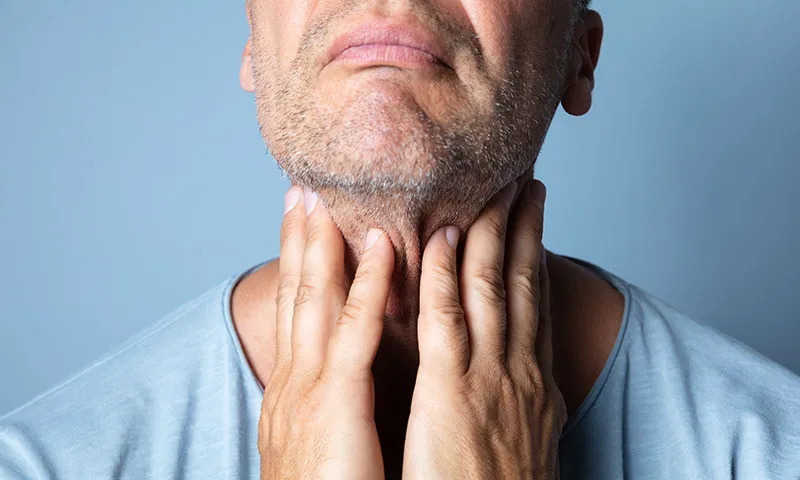
It begins quietly. A mild swelling near the ear or along the jaw. Perhaps some fullness beneath the chin. A dentist rules out a dental cause. A GP prescribes a course of antibiotics that makes no difference. Weeks pass, sometimes months. Then someone finally looks at it properly — and the diagnosis is salivary gland cancer.
Salivary gland cancer in Ahmedabad is not the most commonly discussed cancer, but it is far from rare. It is, however, consistently delayed in diagnosis — because its earliest presentation mimics far more common and benign conditions. At Anahat Oncology, Dr. Vishal Choksi — Fellow of the American Head and Neck Society, trained at Memorial Sloan Kettering Cancer Center — provides the complete spectrum of salivary gland tumour management in Ahmedabad, from initial assessment through surgical resection, facial nerve monitoring, and reconstruction.
The Salivary Glands: Anatomy You Need to Understand
The salivary gland system consists of three major paired glands and hundreds of minor salivary glands distributed throughout the oral cavity, throat, and upper aerodigestive tract:
The Three Major Salivary Glands
Parotid glands — the largest pair, sitting in front of and below each ear, on the outer surface of the masseter muscle. They produce approximately 25% of total saliva. The facial nerve (which controls all facial movement — the ability to close the eye, raise the eyebrow, and move the lips) runs directly through the substance of the parotid gland, dividing it into a deep and superficial lobe. This anatomical relationship is the defining challenge of parotid surgery.
Submandibular glands — located in the floor of the mouth, beneath the lower jaw on each side. They produce approximately 70% of total saliva at rest. The marginal mandibular branch of the facial nerve, the lingual nerve (sensation to the tongue), and the hypoglossal nerve (tongue movement) all run in close proximity.
Sublingual glands — the smallest pair, lying beneath the mucosa of the floor of the mouth. Tumours here are uncommon.
Minor salivary glands — several hundred tiny glands distributed throughout the palate, lips, tongue, cheeks, and pharynx. Though individually small, they are the site of a disproportionate number of high-grade malignancies relative to their size.
Types of Salivary Gland Tumours: Benign vs. Malignant
Salivary gland pathology spans a wide spectrum — from entirely benign tumours to highly aggressive carcinomas. Not every salivary gland swelling is cancer.
Common Benign Salivary Tumours
- Pleomorphic adenoma — the most common salivary gland tumour overall; benign but must be completely excised as incomplete removal risks recurrence and, over time, malignant transformation
- Warthin’s tumour (papillary cystadenoma lymphomatosum) — almost exclusively in the parotid; bilateral in 10%; essentially never malignant
Malignant Salivary Gland Tumours
Mucoepidermoid carcinoma — the most common malignant salivary gland tumour; ranges from low-grade (excellent prognosis) to high-grade (aggressive behaviour)
Adenoid cystic carcinoma — characterised by perineural invasion (spreading along nerve sheaths) and late distant metastasis; notoriously indolent yet persistent; lung metastases may appear years to decades after treatment
Acinic cell carcinoma — predominantly in the parotid; generally low-grade; good prognosis with adequate surgery
Carcinoma ex pleomorphic adenoma — malignant transformation within a long-standing benign pleomorphic adenoma; underscores the importance of excising all pleomorphic adenomas promptly
Salivary duct carcinoma — aggressive, high-grade tumour resembling breast ductal carcinoma; HER2-amplified variants may respond to targeted therapy
Squamous cell carcinoma of the parotid — may represent primary parotid SCC or metastasis from a skin cancer in the parotid region; lymph node status is critical
Warning Signs of Salivary Gland Cancer in Ahmedabad
The following symptoms — lasting more than two to three weeks without a clear benign cause — require evaluation by a salivary gland cancer specialist in Ahmedabad:
- A painless lump near the ear, jaw, or floor of the mouth — most salivary gland tumours, including malignant ones, present without pain initially
- Facial weakness or asymmetry — inability to close an eye, drooping of one side of the mouth, or difficulty raising the eyebrow; these strongly suggest facial nerve involvement by a malignant parotid tumour — an urgent finding
- Rapid increase in the size of a previously stable swelling — often represents malignant transformation of a benign tumour
- Skin fixation — a swelling that is attached to overlying skin rather than mobile beneath it
- Trismus (difficulty opening the mouth) — deep parotid lobe or masseteric involvement
- Numbness in the face or skin — perineural invasion characteristic of adenoid cystic carcinoma
- A neck lump alongside a salivary gland swelling — regional lymph node metastasis
The most important warning sign is facial nerve weakness alongside a parotid mass. This is a surgical emergency — immediate specialist evaluation is mandatory.
Diagnosing Salivary Gland Cancer: The Workup at Anahat Oncology
Clinical Examination
A meticulous examination of the entire parotid region, submandibular triangle, floor of mouth, palate, and neck — including bimanual palpation to assess the floor-of-mouth and submandibular glands internally.
Imaging
- Ultrasound — first-line for accessible parotid and submandibular masses; assesses size, vascularity, and whether cystic or solid
- MRI — superior soft tissue resolution; assesses deep lobe parotid extension, parapharyngeal space involvement, skull base extension, and perineural spread
- CT scan — assesses bone erosion (mandible, skull base), lymph node status, and lung metastases
Fine Needle Aspiration Cytology (FNAC)
An ultrasound-guided needle biopsy providing cytological diagnosis. Helpful but has limitations in salivary gland pathology — core biopsy may be needed when FNAC is inconclusive.
Tumour Board Review
All salivary gland malignancies at Anahat Oncology are reviewed multidisciplinarily before the surgical plan is confirmed — ensuring radiation oncology, medical oncology, and pathology expertise inform the decision.
Salivary Gland Cancer Surgery: The Procedure and the Priority of Facial Nerve Preservation
Surgery is the cornerstone of treatment for salivary gland cancer. The operation performed depends on the gland involved and the extent of disease.
Parotidectomy (Parotid Surgery)
Superficial parotidectomy — removal of the superficial lobe with preservation of the facial nerve; appropriate for low-grade tumours confined to the superficial lobe.
Total parotidectomy — removal of both lobes; required for deep lobe tumours, high-grade cancers, and tumours approaching or involving the facial nerve.
The facial nerve decision: In all but the most extreme circumstances, Dr. Choksi’s surgical philosophy prioritises facial nerve preservation when technically feasible without compromising oncological completeness. When the nerve is encased or invaded by tumour, a planned nerve resection with immediate reconstruction — using sural nerve grafts or greater auricular nerve grafts — provides the best prospects for long-term nerve recovery.
Intraoperative facial nerve monitoring — continuous electrical monitoring throughout parotid surgery — is standard practice at Anahat Oncology, providing real-time feedback that protects the nerve during dissection.
Submandibular Gland Excision
Removal of the submandibular gland with preservation of the lingual and hypoglossal nerves; neck dissection performed if lymph node metastasis is suspected or confirmed.
Minor Salivary Gland Cancer
Excision with wide margins through the appropriate mucosal approach; reconstruction depends on the defect size and location.
Neck Dissection
Performed for all high-grade malignancies and any tumour with clinical or radiological nodal involvement. The parotid lymph nodes themselves are included in the parotidectomy specimen.
Adjuvant Treatment After Salivary Gland Surgery
Radiation Therapy
Post-operative radiation is indicated for:
- High-grade tumours (all salivary duct carcinoma, high-grade mucoepidermoid, carcinoma ex pleomorphic adenoma)
- Positive or close surgical margins
- Perineural invasion
- Lymph node metastasis
Systemic Therapy
Chemotherapy has limited proven efficacy in salivary gland cancer compared to other head and neck cancers. However, targeted therapy — particularly trastuzumab or pertuzumab for HER2-positive salivary duct carcinoma — has demonstrated meaningful response rates and is offered by Dr. Choksi in coordination with medical oncology colleagues.
For the broader head and neck cancer treatment context, read: Head and Neck Cancer in Ahmedabad — Signs, Causes, Diagnosis & Treatment
For salivary gland conditions that occur in the neck more broadly alongside thyroid and parathyroid pathology, read: Thyroid Cancer Treatment in Ahmedabad
Why Dr. Vishal Choksi for Salivary Gland Cancer Surgery in Ahmedabad
Salivary gland surgery — particularly parotidectomy — is the procedure where surgical experience most directly determines outcome. The facial nerve’s anatomical variability, the intimate relationship between tumour and nerve, and the technical demands of complete excision without damaging structures the patient will live with for life make this one of the most technique-sensitive operations in head and neck surgery.
Dr. Choksi’s Memorial Sloan Kettering fellowship provided high-volume exposure to exactly this — parotidectomies, submandibular resections, and minor salivary gland excisions performed by the world’s foremost head and neck surgeons. That training is what distinguishes the surgical outcome at Anahat Oncology.
For patients from Gujarat, Gandhinagar, or Surat seeking a salivary gland cancer surgeon in Ahmedabad, the complete guide to why patients choose Ahmedabad’s Anahat Oncology is here: Cancer Hospital in Gujarat
Conclusion: Salivary Gland Cancer in Ahmedabad — Act on the Swelling That Isn’t Going Away
A persistent lump near the ear, jaw, or floor of the mouth that has not resolved in four to six weeks deserves formal evaluation — not another course of antibiotics and watchful waiting. Salivary gland cancer in Ahmedabad, when diagnosed and operated on early, has good to excellent outcomes for low and intermediate-grade tumours. High-grade tumours and those presenting late — with facial nerve involvement or nodal metastasis — are significantly more challenging.
The window matters. Act within it.
Book Your Salivary Gland Evaluation at Anahat Oncology
Persistent neck or facial swelling deserves expert assessment — not another wait-and-see approach.
+91 079 26468666 | +91 97277 03693

Leave a comment